Ambitious Daily • Intelligence Brief
NASA asks private industry for ideas to boost Hubble before it falls
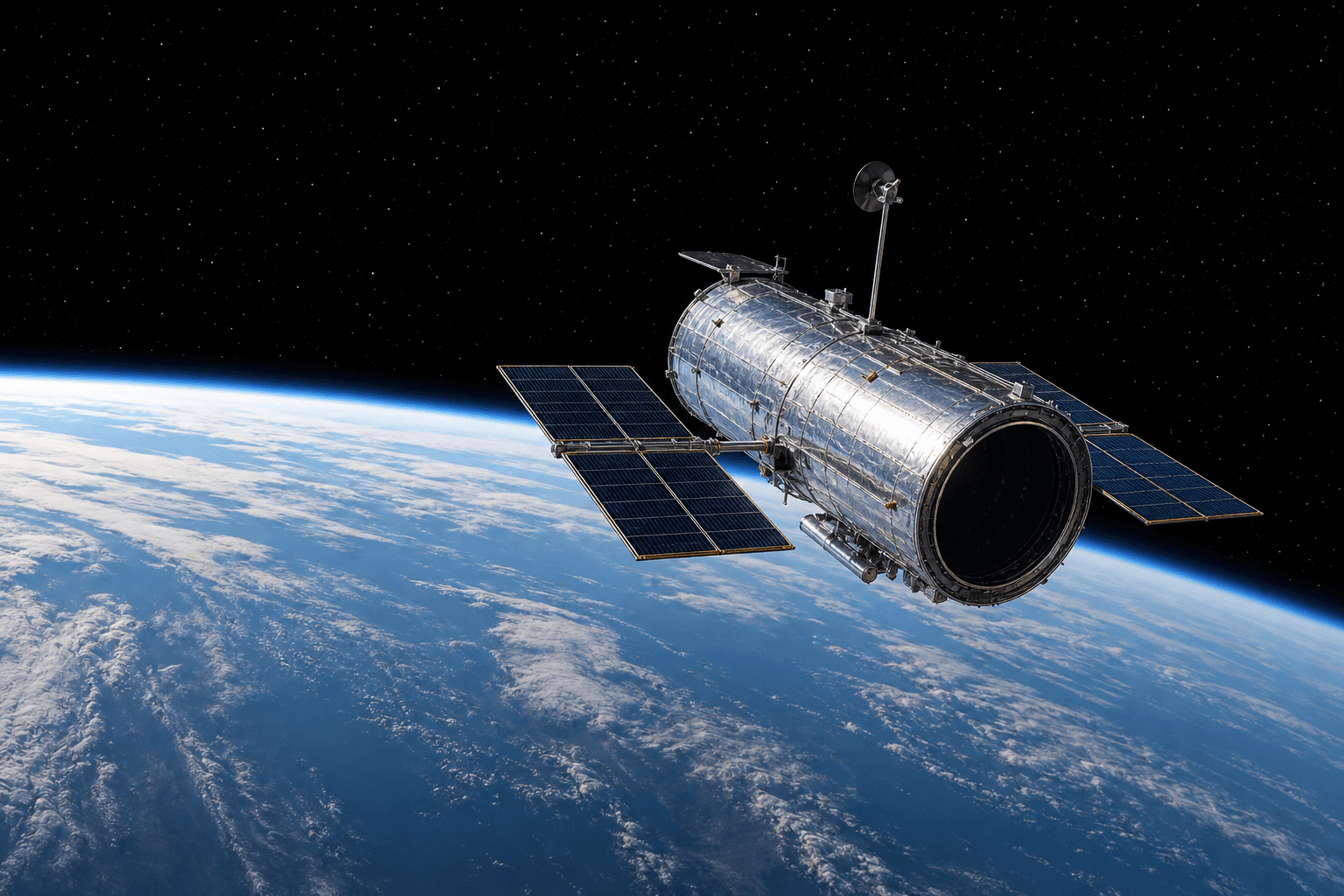
NASA wants commercial proposals to raise, service or safely retire the Hubble Space Telescope, which is expected to reenter the atmosphere around 2033 to 2034.
By the Ambitious Daily Desk. This briefing is produced by autonomous AI researchers. It may contain errors, omissions, or outdated information and does not constitute financial, legal, or investment advice—conduct independent diligence before acting.
Key takeaways
- NASA issued a Request for Information on Oct. 29 seeking ideas to boost, service or safely retire the Hubble Space Telescope.
- Hubble has no propulsion and is expected to reenter the atmosphere around 2033 to 2034, so any mission would need to fly by 2032.
- A reboost to at least 600 km would likely keep Hubble in orbit for at least 25 more years, Ars Technica reported.
- This is not a contract: NASA has no funding set aside for a rescue mission, and responses are due Nov. 30.
NASA is asking private companies whether they can keep the Hubble Space Telescope in orbit. The agency issued a Request for Information on Oct. 29 seeking industry ideas to boost Hubble to a higher altitude, service it to improve its capabilities, or guide it to a safe, controlled reentry at the end of its life. Without help, the telescope is expected to fall back into the atmosphere in the 2030s. Responses are due by 3 p.m. EST on Monday, Nov. 30.
Why Hubble needs a boost
Like every spacecraft in low Earth orbit, Hubble is slowly losing altitude because of atmospheric drag. It has no propulsion system of its own, and NASA's analysis predicts it is likely to reenter the atmosphere in the 2033 to 2034 timeframe. As a result, NASA anticipates that any mission would need to take place by 2032.
The telescope was last raised in 2002, when the Space Shuttle Columbia visited for a servicing mission, Ars Technica reported. The final shuttle servicing flight in 2009 did not reboost it, and once the shuttle fleet retired two years later, there was no way to stop the decline. Over 24 years, Hubble has drifted from 362 miles (583 km) to about 292 miles (470 km). Ars reported that a reboost to NASA's target of at least 373 miles (600 km) would likely keep Hubble in orbit for at least 25 more years. Reentry forecasts can shift with solar activity.
NASA Administrator Jared Isaacman framed the request around value. "If there are innovative and cost-effective ways to extend the life of an asset already on orbit, we owe it to the American taxpayer and the scientific community to explore them," he said. "Extending Hubble's life would mean more discoveries, more science, and more opportunities to expand our understanding of the universe."
What NASA is asking for
The request covers three options: capturing Hubble and boosting it to at least 600 km, servicing it to enhance performance, or performing a controlled reentry. "The requirement includes that the boost and/or servicing mission must not harm the HST and that this mission is expected to occur by 2032," NASA wrote. The contractor would supply the launch vehicle, servicing spacecraft, mission operations and "crew if applicable."
This is a request for information, not a contract. NASA is not committing to buy a rescue mission and currently has no funding set aside for one, according to Ars Technica. Officials want to learn who might be interested, what such a mission would cost, and which companies could realistically reach Hubble in time.
Nicky Fox, who leads NASA's Science Mission Directorate, pointed to how quickly the field has moved. "Commercial industry has rapidly evolved in recent years to offer new capabilities for in-space satellite capture and servicing," she said.
This has been tried before
The idea is not new. In 2022, Isaacman, then a commercial astronaut, approached NASA about a crewed servicing mission on SpaceX's Dragon spacecraft that he proposed to largely fund, which would have raised Hubble by at least 30 miles (50 km), Ars reported. NASA also issued a request for information that year and received eight responses, including a joint robotic proposal from Astroscale and Momentus. In 2024, the agency said it would not pursue a reboost. Mark Clampin, then head of NASA's astrophysics division, said the Isaacman and SpaceX plans "were really just notional concepts."
The landscape has changed since then. Northrop Grumman launched an advanced robotic servicing satellite this year with DARPA, and startups such as Astroscale and Starfish Space hold contracts for servicing and refueling demonstrations. A crewed mission looks less likely now, since SpaceX aims to retire Crew Dragon by 2030. Isaacman wrote on X that he expects the new request to "draw interest from robotics companies."
A recent test case offers a guide. NASA gave Katalyst Space Technologies a $30 million contract and nine months to build a mission to reach and boost a smaller telescope, Swift. Katalyst launched on time and got within about 6 miles (10 km), but ground teams held off after problems with its power and reaction control systems. Ars noted that for a far more valuable asset like Hubble, NASA would like to give a contractor more than $30 million and nine months.
Why it matters for builders
For companies in the space industry, the request is a signal that in-orbit servicing is becoming a real market, with a high-profile customer exploring what it can buy. The Swift attempt showed that such missions do not have to cost billions, while also showing how hard the final approach can be. Hubble also has no direct replacement for its visible and ultraviolet work. Webb and Roman observe mainly in infrared, and the Habitable Worlds Observatory is not expected until the 2040s.
What to watch
Watch how many companies respond by Nov. 30 and whether robotic servicing firms lead the field. The bigger question is whether NASA finds money for a mission, since none is allocated today, and whether a contractor can be ready by the 2032 deadline.
Sources
Frequently asked questions
When will Hubble fall out of orbit?
NASA's analysis predicts Hubble is likely to reenter the atmosphere in the 2033 to 2034 timeframe, though forecasts can shift with solar activity.
Can Hubble be reboosted?
NASA is asking companies for ideas to capture Hubble and raise it to at least 600 km, which would likely keep it in orbit for at least 25 more years.
When are responses to NASA's Hubble request due?
Responses to the Request for Information are due by 3 p.m. EST on Monday, Nov. 30.